FEATURE ARTICLE
Reality isn’t recorded, it’s constructed

What If Reality Isn’t Real?
By Ghala Alyammahi, Digital Media Student
May 2026
FUJAIRAH, UAE
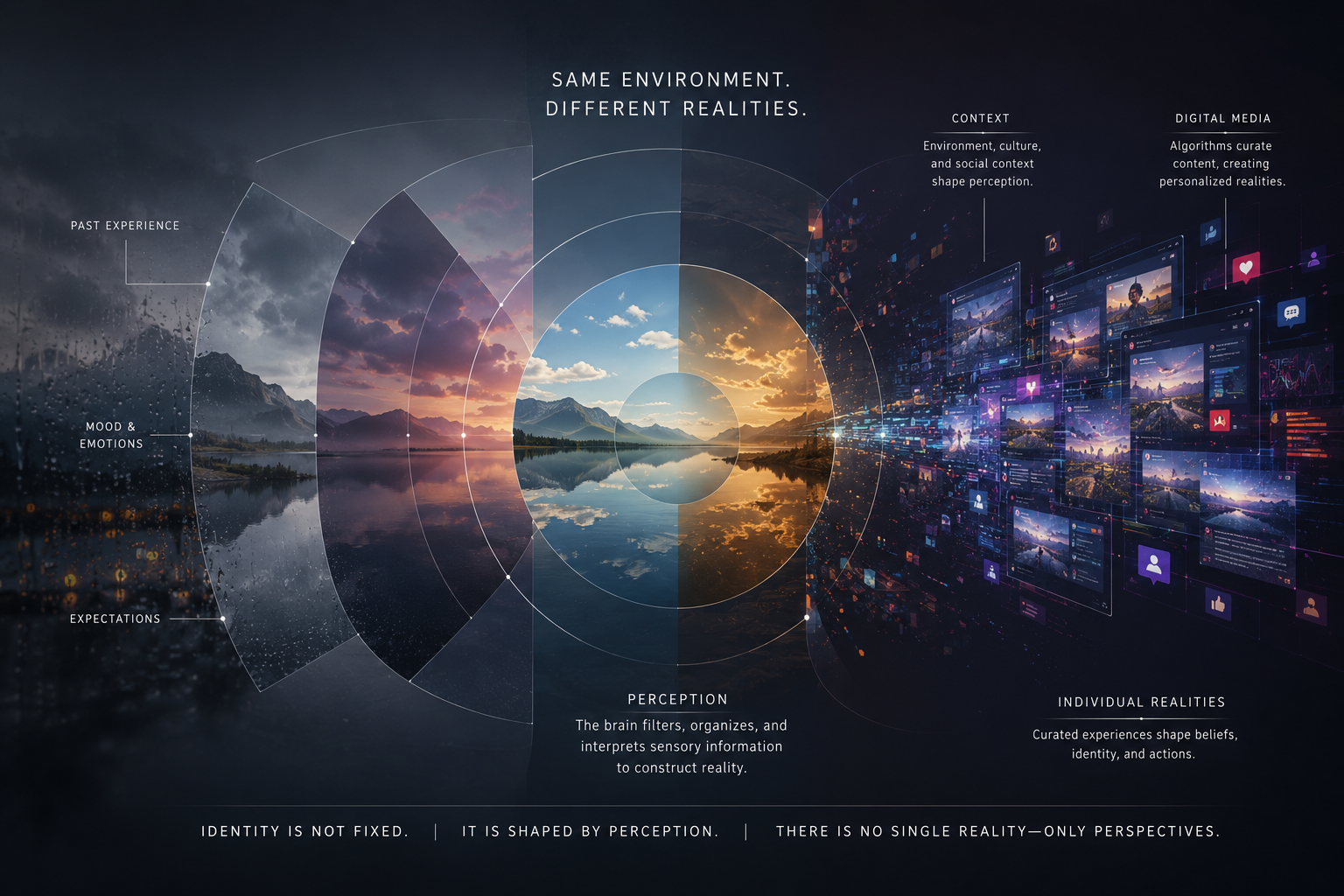
Many people have a common misconception that reality is the same for everyone; that there is one way to experience reality, and that the experience is consistent across people. Research done in psychology and neuroscience suggests that reality is determined by our perceptions, thus, even when individuals are engaged in the same situation, they can experience it than one another. This variation in perception impacts the way an individual interprets their environment and how they view their own identity.
Perception is a process which organizes and interprets sensory information. The brain does "record" the world as it is, but organizes and filters sensory information using past experience, mood and emotional state, and expectations. Therefore, something that feels true for one person will feel true for another, and examples of this can be found in the phenomenon of optical illusions; the results produced by demonstrate that the brain is capable of altering (including inventing) the details associated with an item to give the brain a complete picture.
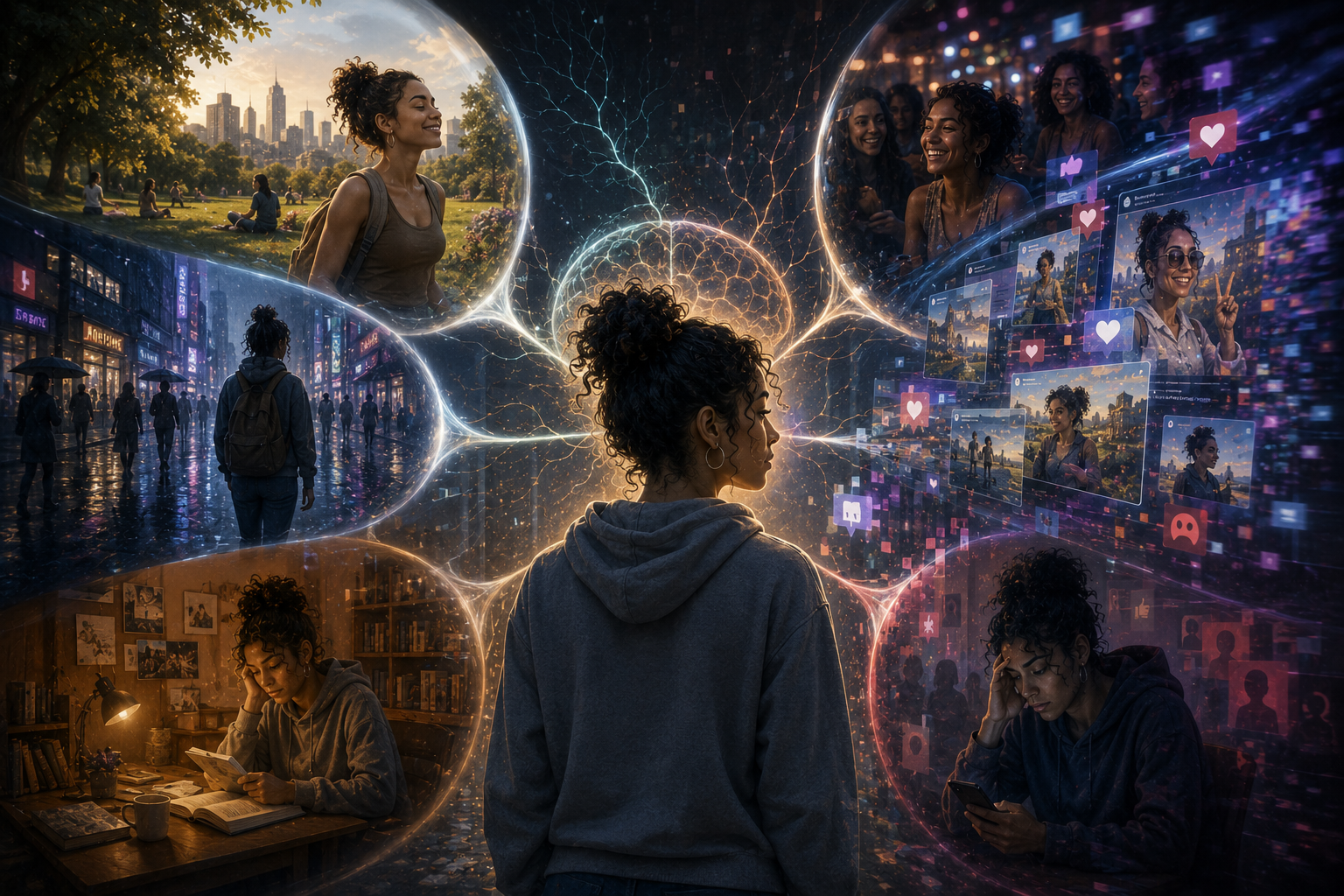
Contextual factors influence the way we perceive things. The same environment can be perceived as welcoming and unwelcoming depending on the mood of the individual in the environment, the social context, or their previous experience with environment. The influence of these factors affects how an individual responds to a given situation as well as how they perceive themselves. therefore, an individual can be perceived as confident in one environment and reserved in another, where the individual is exhibiting inconsistent behavior, and the context of the environment has changed.
Digital media has this phenomenon. Online media have created an experience for users by using algorithms to curate content based on an individual's behavior. As individuals experience curated content, they become inundated with information that affirms their opinions, generating individual versions of "reality." Repeated exposure to these personalized realities will have an effect on how individuals perceive themselves, their opinions and their actions; in how they adapt their online persona to provide context for different audiences and different platforms/mediums.
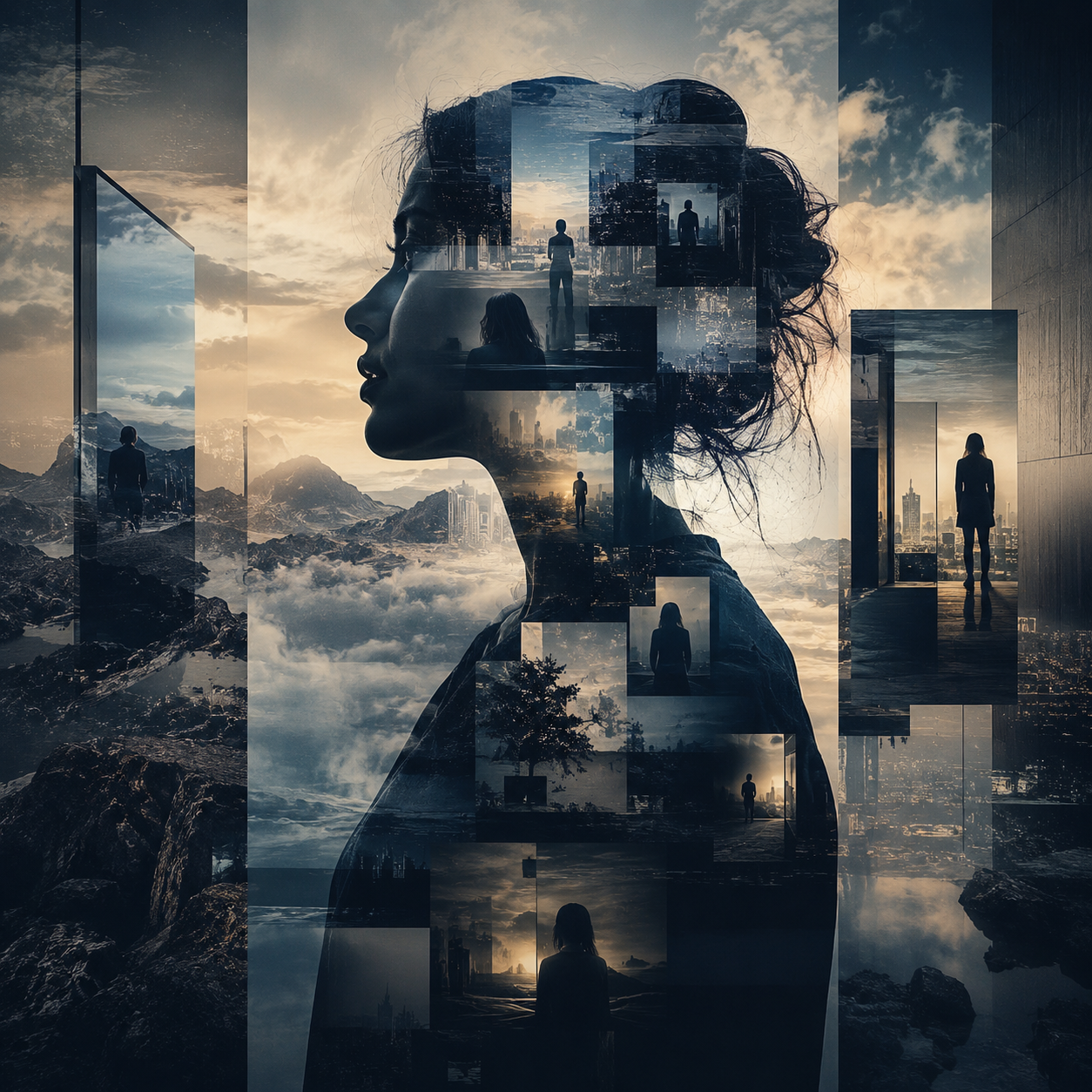
The conclusion drawn by researchers is that the flexible experience of one's reality leads to the increased flexibility of an individual's identity than was considered. Identity is no longer viewed as a fixed construct, but as a construct that is constantly changed by the experiences and perceptions of the person and the environment. The flexibility of one's identity makes it easier to exist in multiple contexts; whether in social or professional settings, or digitally.
The reality is that people in society believe that individuals should have a consistent portrayal of their identity in contexts. Beliefs about identity and fail to acknowledge how perception functions and the extent to which one's environment influences behavior. As the world continues to evolve into an increasingly complex and digitally mediated entity, understanding the function of perception paramount to understanding one's identity.
The research into one's perception continues to illuminate the idea that there is no such thing as a shared reality. Reality is an assemblance of different individual perspectives that influence the way that one views their environment and the perception that one has of themselves.
(word count: 523)