
EDITORIAL ARTICLE
Integrity over performance
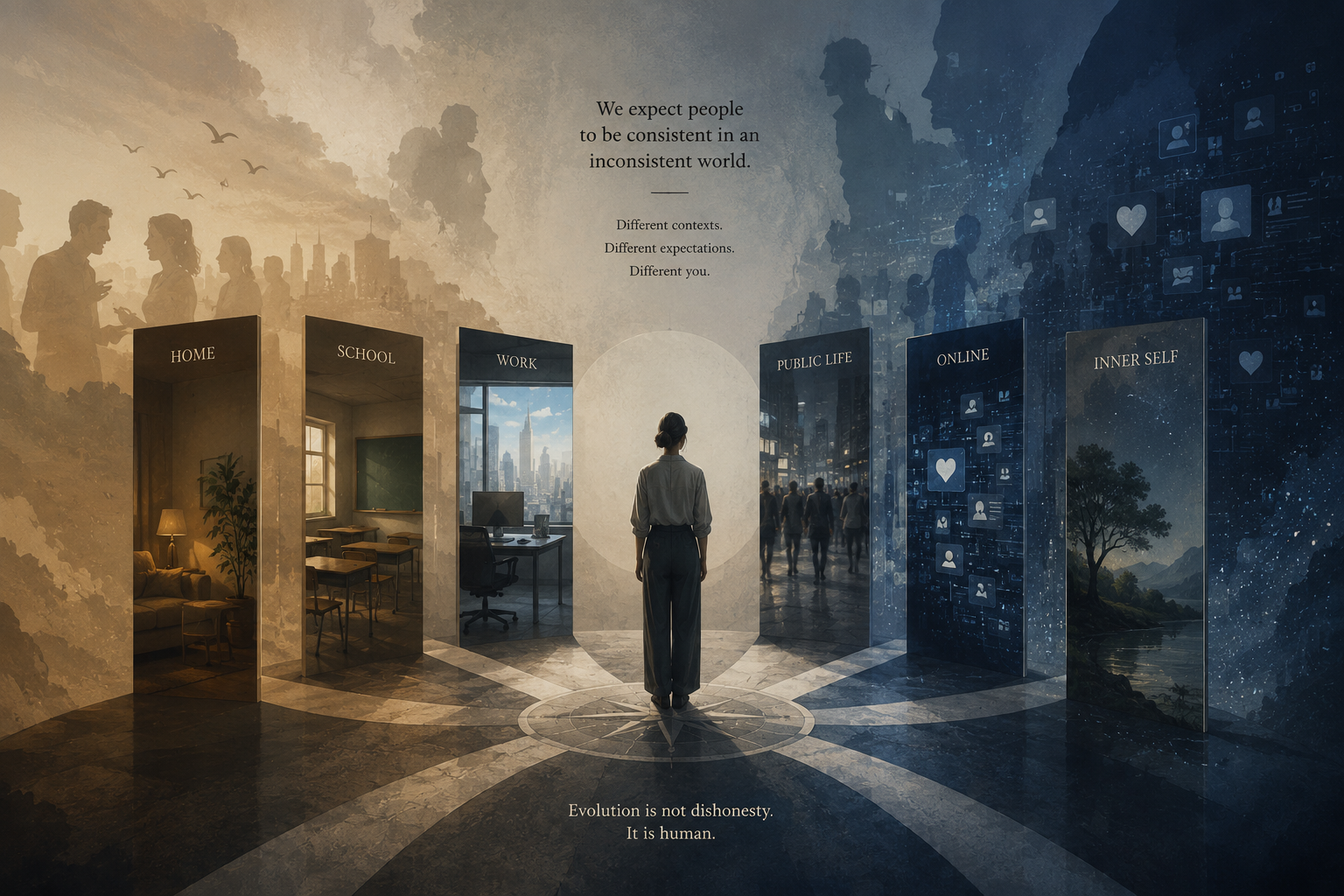
We Expect People to Be Consistent in an Inconsistent World
By Ghala Alyammahi, Digital Media Student
May 2026
FUJAIRAH, UAE
Despite how life moves today, the expectations of society are for people to provide the same level of commitment and consistency to situation being presented to them. We commended businesses that adapted through technology, as well as those that handle adverse situations; however, we condemn humans who demonstrate similar adaptive qualities. Accordingly, society has fostered a culture that equates the two by believing that people who are being disingenuous, those who have complex are not trustworthy.
One contributing factor to this issue, is how people view situations from their perspective and make assumptions regarding the "truth" of that perspective what they see happening around them. As a result, if someone demonstrates behavior in various settings, an observer assumes that there must be something. What they fail to acknowledge is that our environments, stressors and social cues can all contribute to how we shape our identity.
Each day comprises multiple settings and multiple status levels; therefore, there will be changes in your behavior. For example, moving from home to school, then work, and then onto a public place, will all have different expectations and power dynamics within those settings. For instance, as your tone becomes more formal, the boundaries you establish become more defined, and your humor diminishes, there is indication that you are presenting a “false” self; rather, what you are exhibiting is a level of social intelligence the ability to ascertain a room and adapt your behaviors accordingly.
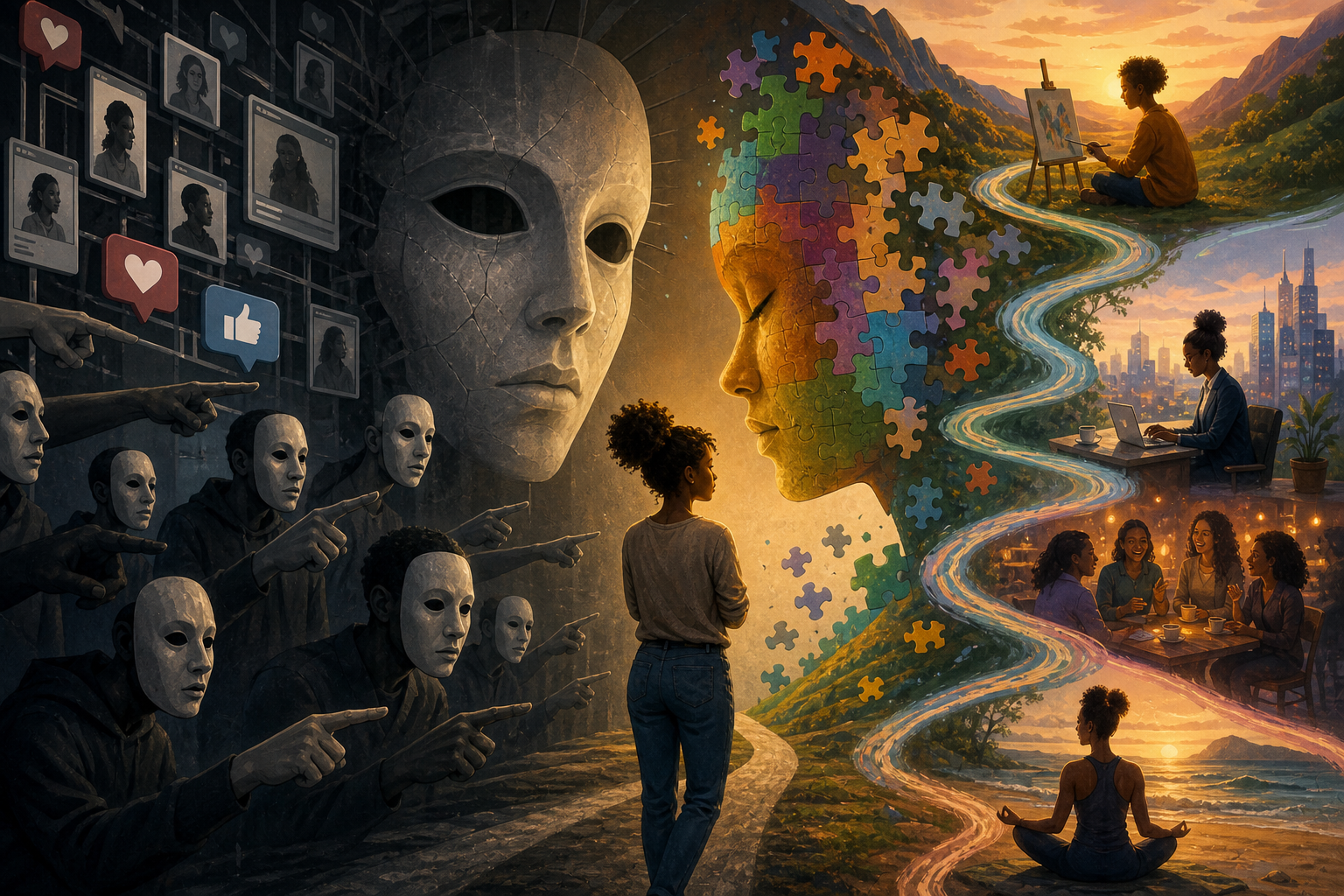
The expectations of consistency in our digital lives have become harsher. Social media sites encourage users to have identity to make them easy to follow and categories; this includes how they present aesthetically, the tone that is their postings and other aspects of their online persona (interests and beliefs). If a person changes due to changing interests and beliefs or because they are growing, they are often accused of "switching up" on their followers. The algorithms encourage this repetitive behavior by pushing both creators and users toward pattern behaviors. In other words, you continue to be predictable, or you will not be followed.
The expectation of consistency through social media is unrealistic, and unhealthy. It puts the pressure on an individual to "perform" rather than reflect on who they are. It forces them to maintain a certain "image," rather than find out who they are. Those who are going through "change" those who are going through the transition from student to adult, those recovering from trauma, those learning new boundaries—are then punished by society for going through this process, because society has labelled their evolution as "dishonesty."
Consistency should not equal sameness. A healthier measurement of an individual would be considered their "integrity" the value system that they have regardless of how they behave depending on the circumstances they find themselves in. Schools, work environments, and online communication portals can help individuals by celebrating and supporting a person's ability to be that nuanced being (not giving them a label quickly or allowing them the opportunity to change themselves without "public shaming").
If society is inconsistent, then the human self will be inconsistent; it is time to stop viewing evolution as a flaw, and to accept this reality.
(word count: 528)