
OPINION PIECE
Adaptation is not dishonesty; it’s intelligence
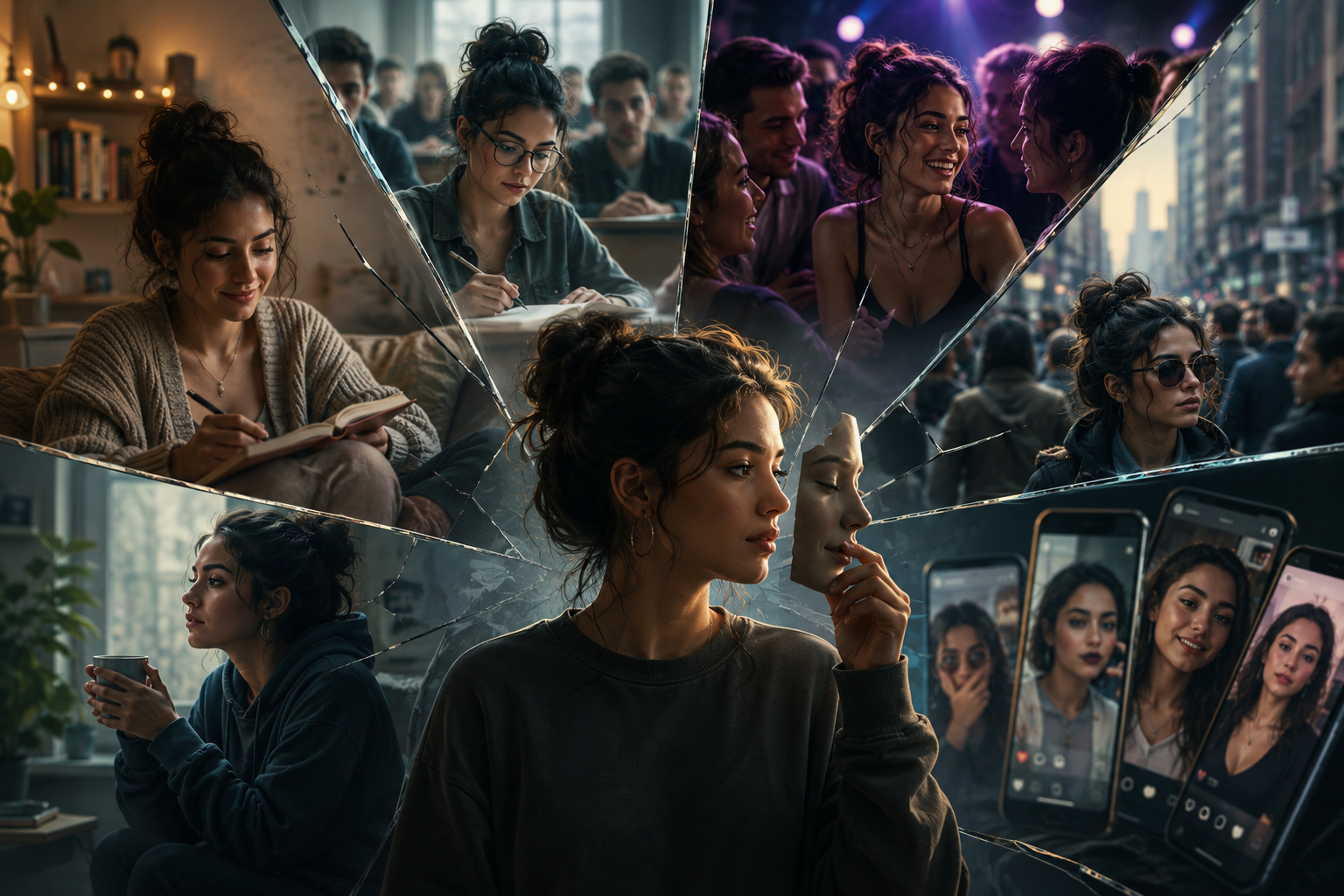
You Are Not One Person, And That’s Okay
By Ghala Alyammahi, Digital Media Student
May 2026
Fujairah, UAE
Have you ever believed you needed to present you Whether it be your voice, your self-esteem, or your thoughts your concern is that others may call you “fake” if you did not provide the same.
Then, as you began to focus on your environment, the reality became apparent: people modify their character to appear different than they really are, people are modified by their environment.
Some examples can be derived from people’s home life, on a university campus or at a close friend's get-together versus public place where there is a larger crowd. Within one’s ‘home’, a person is familiar with the environmental aspect, on a university campus, a person has different expectations. When you are socializing with friends (going to the movies) you will have the ability to be creative. when you are socializing people online (through social media), you have a 'worthy audience' (friends or strangers).
In given space, the brain will take in clues that it has received from that space and determine where it is “inclusive,” “acceptable,” or “within the guidelines.” This behavior is not dishonest; it is an outcome of adaptation. The conundrum within society is that people continue to maintain two identities as though they are static. When an individual behaves differently within a particular context (the same as when they had a more serious attitude versus a more relaxed one), they are considered to have inconsistent behaviors (dishonesty).
However, the foundation is that authenticity from consistency. Authenticity requires you to conduct yourself in the manner for the moment. Consistency is repeating yourself in the same manner regardless of how you are feeling at that given moment with the advent of digital media, this process has become more difficult. Social platforms tend to reward personalities that are recognizable 'brands'. People feel pressure to package themselves into clear identity. One aesthetic, one tone, one version of themselves.
People who grow, heal, learn, or adjust to other circumstances can be seen as suspicious because of their changing nature. The online world tends to desire clarity; real life is full of complexity. Being 'not one person' does not equate to being lost; it can express itself as layered; as having boundaries; and as being able to protect parts of the self from spaces. Each time someone enters a new environment, they expose of themselves that resides comfortably within that environment the ability to move in and out of these different versions of yourself is part of being human.
If reality is determined by the perspective of someone, as well as by the context; is identity. The idea of having to relate to a non‑changing identity is unrealistic; it also places a burden on individuals. To grow is to change; to survive is to be able to adjust and, to mature is to have the ability to recognize which version of yourself belongs within which environment. You are not one version of yourself; that is not a defect, it is evidence that you are dynamic, changing, organic.
(word count: 505)